
Cyanmoon
Cyanmoon TeamLifestyle
4.5168.00 Reviews
- Version
- 1.0.20260727
- Installs
- 50.00K
- Age Rating
- Teen
Screenshots

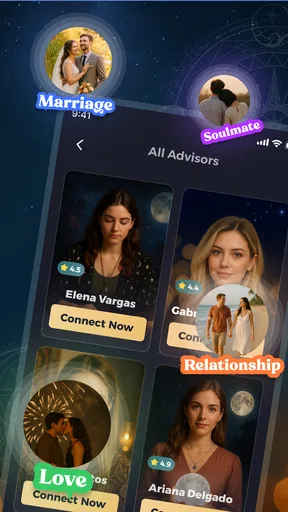
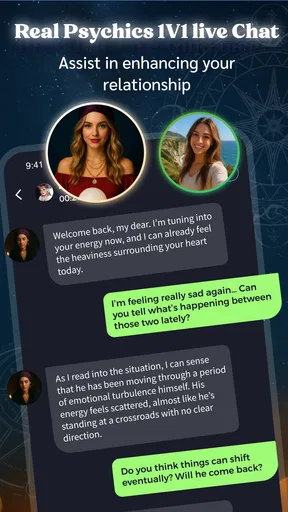
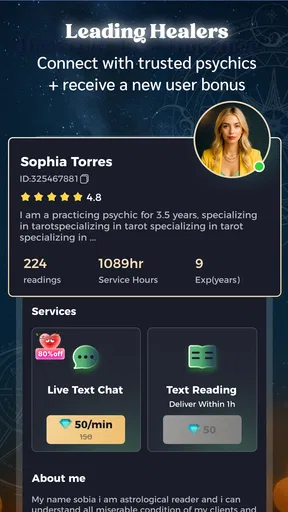

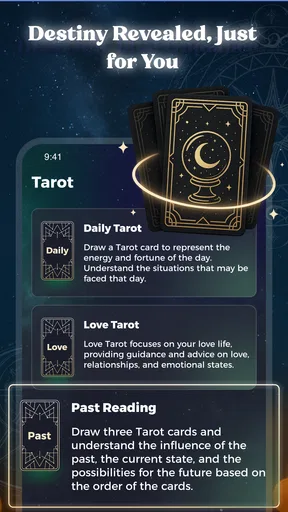
Our Review of Cyanmoon
 Analysis by Appyee
I approached Cyanmoon as a casual lifestyle app for people who enjoy tarot, horoscope-style reflection, and relationship questions. Its store summary points to love tarot psychic reading and horoscope content, while the short description simply identifies Cyanmoon. That combination gives the app a clear emotional purpose: it is meant to offer a moment of personal interpretation rather than function as a practical planner, reference tool, or evidence-based advice service.
My overall impression is that its appeal depends less on treating every reading as a prediction and more on using the experience as a structured way to pause and think. If you like symbolic prompts, romantic self-reflection, or a small ritual when you are unsure what you feel, the concept is easy to understand. If you want verifiable forecasts, professional counseling, or detailed astrological analysis, I would be much more cautious about making it your main choice.
How Cyanmoon fits into everyday use
The app comes from Cyanmoon Team and sits in the Lifestyle category. It is free to download, which makes trying the basic experience relatively low-risk. At the same time, the app includes in-app purchases ranging from $1.99 to $199.99 per item. That is the most important value detail to keep in mind: free access and optional spending are not the same thing, so I would explore the unpaid portion first and decide whether the experience genuinely adds something before paying for anything.
It is aimed at Teen users and supports devices running Android 6.0 or later. The app was released on January 3, 2024, and its current version is 1.0.20260727. Those details matter mainly for compatibility and expectations. Someone using an older Android phone should check that the operating system meets the requirement, while users on newer devices should still remember that compatibility alone does not guarantee that the style of reading will suit them.
The audience response is fairly encouraging: Cyanmoon has a 4.5 average from around 852 ratings, with more than 160 written reviews, and it has passed 50K installs. I read those figures as signs of real interest rather than proof that every reading will feel accurate or useful. Tarot and horoscope apps are highly personal. A reading that feels thoughtful to one person can seem vague or repetitive to another, even when both people use the same screen.
In practical terms, I see it as a private reflection companion. I would open it after a confusing conversation, before making a decision about how to approach someone, or during a quiet evening when I wanted a prompt to organize my thoughts. I would not use it to decide whether to stay in a harmful relationship, make a major financial choice, or replace a direct conversation with another person.
What the free starting point is worth
The free price is the strongest reason to give Cyanmoon a fair trial. You can judge the tone, pacing, and usefulness of its readings without committing money at the door. That is especially valuable in this category because personal fit is difficult to predict from a store page. Some readers enjoy short, suggestive interpretations; others quickly become frustrated if the wording feels broad.
My advice is to test the app with a question that is specific enough to be meaningful but not so emotionally loaded that you will accept any answer as a command. Instead of asking whether a relationship is “destined,” I would frame the session around what I am noticing, what I may be avoiding, or what kind of conversation I need to have. This approach makes the reading more useful as a prompt and reduces the temptation to treat it as an unquestionable verdict.
The free experience also lets you evaluate whether the app’s presentation works for you. In a tarot product, the atmosphere is part of the value. If the wording, visual rhythm, or style makes you feel calm and curious, the app may earn a place in your routine. If it makes you anxious, pushes you toward repeated checking, or leaves you more confused than before, no paid option is likely to fix that basic mismatch.
Because individual purchase prices can reach a substantial level, I would be deliberate around payment screens. Read what each purchase offers, distinguish a one-time item from anything that might recur, and avoid buying while feeling distressed about a romantic situation. The free access is enough to establish whether you enjoy the format. Paying should only follow a clear personal decision, not the pressure of an urgent prediction.
Where the app can deliver genuine value
The most convincing use case is emotional organization. When I have several competing thoughts, a symbolic reading can give me a starting point. The cards or horoscope-style language do not need to reveal an objective future to be useful; they can help me name a concern that was already present. That is a modest benefit, but it is a real one when the alternative is endlessly replaying the same question in my head.
A second useful workflow is journaling around a reading. I would note the question before opening the app, record the main message afterward, and then write down one action that depends on my own judgment. For example, the action might be waiting until I feel calmer before replying, asking someone directly what they want, or setting a boundary. This turns a passive reading into a small reflection exercise and keeps responsibility with me.
There is also value in using it as a conversation starter with yourself rather than with the person you are worried about. A love-focused reading can expose whether I am seeking reassurance, avoiding rejection, or hoping for permission to act. That is more insightful than asking the app to prove what another person feels. In this role, Cyanmoon is closer to a guided prompt than a psychic authority.
For a short daily ritual, I would keep the sessions occasional and give each one a clear purpose. Repeating the same question until the answer becomes more favorable can create noise instead of clarity. A better habit is to use one reading, step away from the screen, and compare the interpretation with observable facts: how the other person behaves, what has actually been said, and what I need from the relationship.
That distinction is particularly important for younger users. The Teen content rating makes the app accessible to that age group, but accessibility does not mean every emotional situation is easy to handle alone. A reading should not be used to justify secrecy, pressure, unsafe meetings, or tolerating disrespect. If a relationship problem involves fear, control, threats, or serious distress, a trusted adult or qualified professional is a better source of help.
How it compares with familiar alternatives
Compared with a physical tarot deck, Cyanmoon is more convenient and less personal. I do not need to learn card layouts, keep a deck nearby, or interpret every symbol from scratch. That makes it approachable for a beginner who wants an immediate reading. The trade-off is that a physical deck can encourage slower reflection and a more hands-on ritual, while an app can make it tempting to tap through several readings in quick succession.
Compared with a general horoscope website, the app’s appeal is likely to be the dedicated mobile setting and the focus on love-oriented questions. A website may offer broader sign information or articles to browse, while Cyanmoon is better suited to a compact, personal session. I would choose the website alternative when I want background reading and choose the app when I want a more direct prompt without searching through long pages.
Compared with a journaling app, Cyanmoon supplies the initial theme instead of asking me to create one from an empty page. That can be helpful on days when I know I am unsettled but cannot explain why. A journal remains better for tracking patterns over time, recording exact events, and separating feelings from facts. For serious self-understanding, I would combine the two rather than expect a tarot reading to preserve a detailed personal history.
Compared with professional relationship advice, the difference is much larger. Cyanmoon can offer a reflective moment, but it cannot assess context, hear both sides, identify risk, or tailor guidance responsibly. If I need help with communication, grief, abuse, or a major life decision, a qualified person is the stronger option. The app is best kept in the lighter category of personal reflection.
Small habits that improve the experience
One practical tip is to separate the question from the desired answer. Before starting, I would write a neutral version of the issue and then a sentence describing what I hope to hear. Seeing both makes it easier to notice when I am using the reading for reassurance. This is a simple safeguard, but it prevents an emotionally charged session from becoming a substitute for evidence.
Another is to set a stopping rule before opening the app. I would decide that one reading is enough for one question and that I will wait before asking again. This matters because love-related uncertainty can encourage compulsive checking. The app may be enjoyable as a ritual, but repeated readings can blur the difference between reflection and dependence.
I would also compare the reading with a three-column note: what the app suggests, what I know, and what I can control. The first column preserves the fun and symbolism. The second keeps me grounded in actual conversations and behavior. The third turns the session into a practical next step. This method gives Cyanmoon a defined role without asking it to make decisions that belong to me.
Finally, I would be careful with purchases when the emotional stakes are high. The presence of items priced from $1.99 up to $199.99 means the free entry point should be treated as a testing stage, not as an automatic promise that every extra reading is worth buying. I would only spend if I could explain exactly what I was purchasing and why it improves my experience beyond the free use.
Who is likely to get the most from it
Cyanmoon is a good fit for someone who already enjoys tarot or horoscope content and wants a convenient mobile version of that interest. It may also suit a curious beginner who wants to see whether symbolic readings help with reflection before investing in cards, books, or paid consultations. The free starting price makes that experiment easier, provided the user remains comfortable with the optional purchase structure.
I think it works particularly well for people who enjoy short rituals. A few quiet minutes after work, before journaling, or during a weekend reset can give the app a natural place in a routine. The strongest results will come from users who treat the messages as prompts and are willing to question them, rather than users who need exact timing, guaranteed outcomes, or certainty about another person’s feelings.
It is less suitable for anyone who finds predictive language upsetting or who tends to make repeated checks when anxious. I would also skip it as a primary tool if I wanted detailed birth-chart interpretation, long-term mood tracking, structured therapy exercises, or expert relationship guidance. A focused alternative in one of those areas would offer more appropriate depth than a love-reading app.
My final decision on value
After considering the free access, the lifestyle focus, and the optional purchases, I see Cyanmoon as a pleasant but limited companion. Its best value is not in promising certainty. It is in giving a user a themed pause, a question to consider, and perhaps a clearer view of feelings that are already present. That can be worthwhile when used lightly and intentionally.
The 4.5 average and more than 50K installs suggest that the format has found an audience, but popularity does not remove the need for personal judgment. I would download it if I enjoyed tarot or horoscope rituals, wanted a convenient way to reflect on romantic situations, and was comfortable evaluating the free experience before spending. I would skip it if I wanted factual predictions, professional support, or a complete replacement for journaling and direct communication.
My recommendation is therefore cautious but positive: try the free side, ask grounded questions, limit repeated readings, and treat every interpretation as optional perspective. The app is most valuable when it helps you think more clearly, not when it thinks for you. With that boundary in place, Cyanmoon can be an entertaining addition to a personal reflection routine; without it, the emotional and financial trade-offs become much harder to justify.
Verdict
Strengths of Cyanmoon
- Clean interface makes the app easy to navigate.
- Lightweight design should run smoothly on many devices.
- Useful for users who prefer a simple, focused experience.
- Quick access to the app’s main functions.
- Minimal layout avoids unnecessary visual distractions.
Limitations of Cyanmoon
- Some features may feel limited compared with larger alternatives.
- The app may lack extensive customization options.
- Occasional performance differences can occur across devices.
- New users may need time to understand all available tools.
- Updates and support may not be as frequent as expected.
Similar Picks in This Category
View All
SmartThings
Samsung Electronics Co., Ltd.4.6

Google Home
Google LLC4.0

Pinterest4.2

Astrotalk - Talk to Astrologer
Astrology & Horoscope4.7

My Verizon
Verizon Consumer Group4.5

Samsung Wallet (Samsung Pay)
Samsung Electronics Co., Ltd.4.1
Frequently Asked Questions
What is Cyanmoon and what can users do with it?
Cyanmoon is an app designed for users who want a focused digital experience with a clean interface and straightforward navigation. Before downloading, it is worth checking the current store description because the available tools, supported content, and main purpose may vary between versions. After installation, explore the settings and permissions first so you understand exactly which features are available on your device.
Is Cyanmoon free to download and use?
Cyanmoon may be available as a free download, but the actual cost can depend on the platform, region, and version offered through the official app store. Some features may also require in-app purchases, a subscription, or a one-time payment. Review the pricing section before confirming installation, and check whether subscriptions renew automatically if payment details are requested.
Which devices and operating systems support Cyanmoon?
Compatibility can differ depending on whether you use Android or iOS, as well as the operating-system version installed on your phone or tablet. Before downloading Cyanmoon, compare the minimum requirements shown on the official store page with your device specifications. Older devices may install the app but provide slower performance, limited functionality, or an experience that differs from newer models.
Does Cyanmoon require special permissions or an internet connection?
The permissions required by Cyanmoon depend on the features included in the version you install. The app may request access to items such as notifications, storage, network connectivity, or other device functions. Read each permission prompt carefully and allow only what seems necessary. Some functions may work offline, while updates, synchronization, online content, or account-related features may require an active internet connection.
Is Cyanmoon safe to install, and how should users protect their privacy?
Download Cyanmoon only from a reputable official store or a verified source to reduce the risk of modified or harmful files. Before creating an account, review the privacy policy and understand what information may be collected, stored, or shared. Keep the app updated, use a strong password when applicable, and avoid granting permissions that are unrelated to the features you intend to use.
